October 19, 2026 · The Participation Economy
Customer Loyalty Programs: Types, Examples and How to Start
A practical guide to choosing and launching a loyalty model, from stamps and points to tiers, memberships and shared rewards.
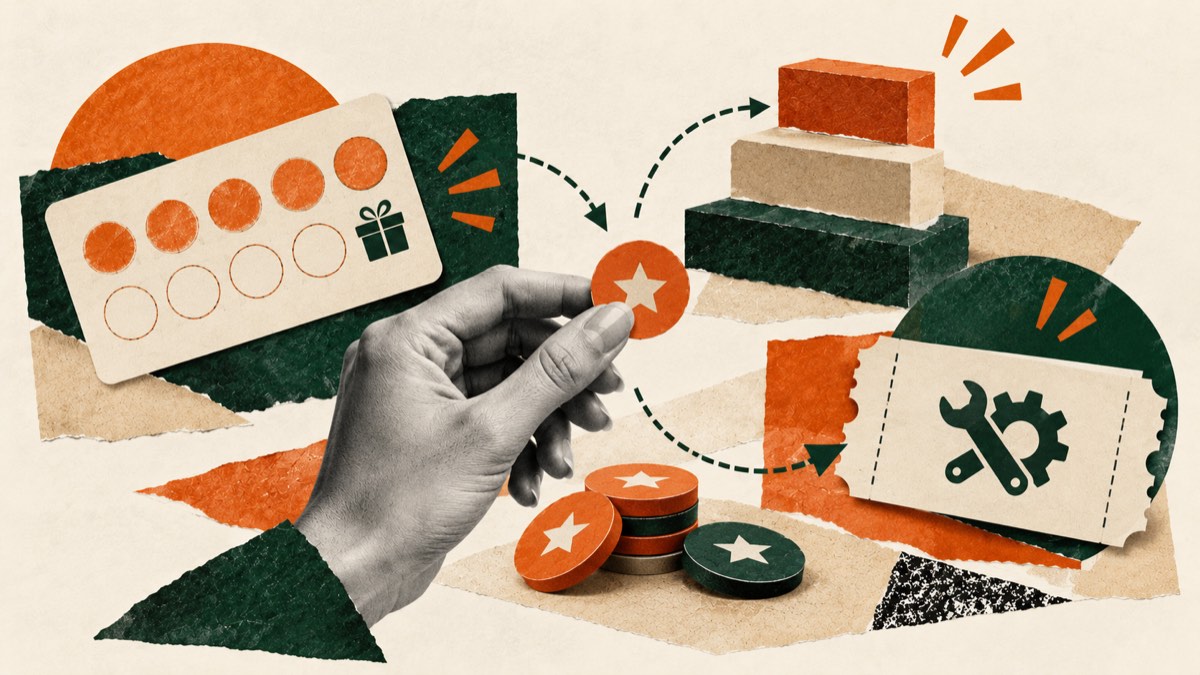
A customer loyalty program offers defined benefits for qualifying behaviour. It can recognise repeat purchases, visits, learning, referrals or other useful contributions, provided the exchange is clear and the business can deliver its promises.
The right design depends on how customers use the business, what they value and what the economics can support. A points system is one option, not the starting requirement for every program.
This guide compares the main models and provides a practical launch sequence. It focuses on choosing and operating the program; the detailed loyalty ideas guide provides specific contribution and reward combinations.
Start with the customer behaviour
Choose a problem you can describe in ordinary language. Customers might enjoy their first visit but not return, fail to discover a useful service or rarely introduce interested friends.
Those problems call for different responses. A return-visit benefit might suit a recurring service. A discovery journey might help people understand a wider offer. A referral program needs a useful invitation for the newcomer as well as the existing customer.
Check the underlying experience before adding incentives. If people do not return because the service disappoints them, rewards can make the same problem more expensive without resolving it.
Ask customers what prevents the desired next step. Their answer may point towards clearer information, better availability or simpler booking rather than a new benefit.
Compare the main program types
Use the following as a design framework. Real programs can combine several elements, and their current terms determine the actual offer.
| Model | How it works | Main operating question |
|---|---|---|
| Visit or stamp program | A defined number of qualifying actions unlocks a benefit | Can completion be recorded simply and reliably? |
| Points | Eligible behaviour earns units redeemable under stated rules | Can members understand earning and redemption? |
| Tiers | Qualifying activity unlocks different levels of benefits | Are thresholds meaningful and benefits deliverable? |
| Paid membership | A fee provides access to a specified package | Does the recurring value justify the fee? |
| Referral rewards | An introduction meeting stated conditions earns a benefit | Is the newcomer suitable and the cost sustainable? |
| Coalition rewards | Several organisations participate in a shared arrangement | Who funds, verifies and delivers each benefit? |
A small business can start with one mechanism. Combining every model increases the number of rules staff and members must understand.
Visit-based programs suit a simple milestone
A visit-based design can be useful when the qualifying event is straightforward and relatively consistent. The member can see progress towards a defined outcome.
Decide what counts as a visit or completed action. A booking, attendance and paid transaction are different milestones. Use the one connected to the objective.
Explain whether partial completions, cancellations or multiple actions on the same day count. Keep the rule simple enough that frontline staff can apply it during normal work.
The main limitation is fit. Customers buying occasionally or across widely different transaction values may find a uniform milestone less relevant. Investigate their actual use rather than choosing the model because it is familiar.
Points provide flexibility and create explanation work
Points can recognise several kinds of contribution, but members need to understand their practical value. A balance without a useful redemption option may feel abstract.
Define earning, qualifying purchases or actions, redemption options and any expiry conditions. Test whether someone can explain how to reach a benefit without doing complicated arithmetic.
Sephora’s Beauty Insider documentation provides an example of points combined with other membership features. Its rules are specific to the relevant market and program version. Sephora’s program information.
For a small pilot, a limited number of benefits can be easier to operate than a large catalogue. Keep the earning rule connected to useful behaviour rather than rewarding every available interaction.
Tiers need a reason beyond the badge
A tier can communicate a level of access or recognition. Its value depends on the benefits and the effort needed to qualify.
Choose thresholds based on the customer journey and business economics. Avoid setting a target so high that most members cannot reasonably imagine reaching it, or so low that expensive benefits become difficult to fund.
Explain how status is earned, maintained and lost. A member should know whether eligibility depends on a calendar period, rolling activity or another defined measure.
Plan the experience when someone moves down a tier. Clear communication and proportionate benefits can make the program easier to understand than a system built around surprise loss of access.
Membership benefits and ownership are different
A paid membership can provide a useful package without creating ownership. A co-operative may offer both membership rights and customer rewards, which need separate explanation.
REI’s published member-reward information describes an estimated annual benefit on eligible purchases, with conditions and exclusions. It also distinguishes components that may be governed by different terms. REI member reward information.
The lesson for another business is to use precise language. Access, discounts, voting rights and financial participation are different promises.
If you are exploring a structure with formal member rights, read community-owned businesses. Adding a rewards label does not settle the governance or financial arrangement.
Design the reward around real value
Ask what participants want and what the business can sustainably provide. The retail price, delivery cost and perceived value of a benefit are different quantities.
Early access uses a different resource from a physical gift. A group workshop uses capacity differently from an individual consultation. Product credit may reduce revenue from a purchase the customer already planned.
Model demand for each option. If every eligible member chooses the most demanding reward, can the team deliver it? If a benefit has limited availability, explain that before someone spends time or money qualifying.
Provide a small set of choices where it improves relevance, and make the differences easy to understand. Choice is useful when the organisation can support it reliably.
Build the cost model before the invitation
Include rewards, software, administration, support, communication and setup. Distinguish costs that increase with participation from those that remain relatively fixed.
For a hypothetical service, calculate the contribution remaining after ordinary delivery costs, then examine what the reward consumes. Avoid using revenue alone as the budget available for incentives.
Account for rewards earned but not yet delivered using a consistent management model. An early pilot can look inexpensive simply because many obligations remain outstanding.
Use the loyalty ROI worked example to examine incremental contribution and sensitivity. Its figures are illustrative; substitute the economics of your own offer.
Make staff part of the launch
The member experience depends on the people who explain and deliver the program. Give staff the same rules, current materials and support route.
Run through enrolment, earning, redemption, cancellation and correction. Ask a team member unfamiliar with the project to explain the offer back to you.
Provide clear statuses where needed: waiting for qualification, approved, delivered or under review. Staff should not have to infer eligibility from a confusing account history.
When an exception occurs, record the decision and improve the guidance if it reveals an unclear rule. Consistency makes the program easier for both participants and the team.
Keep data collection proportionate
Collect the information necessary to operate the program and communicate under the appropriate permissions. Explain what membership involves and let people manage their preferences.
Avoid asking for unrelated personal details before someone can experience the first benefit. Additional friction needs a clear purpose.
Define who can access records and how errors are corrected. A member should have a practical route to resolve a missing visit or incorrect status.
For referral programs, a shareable invitation can allow the newcomer to decide whether to respond. Do not treat membership as a reason to collect someone else’s contact list.
Pilot one coherent journey
Choose a defined customer group, one primary qualifying action and a benefit you can honour. Set the capacity, budget and review period before launch.
A hypothetical venue might test a welcome session, one return-attendance milestone and early access to a future event. It would measure whether members understand the offer, complete the journey and receive value.
Keep changes manageable during the pilot. Fix urgent delivery problems, but record revisions so later comparisons remain interpretable.
Ask participants who did not finish what stopped them. Their experience can reveal a condition or operational barrier that the successful group no longer notices.
Explain changes before they affect the member journey
A program may need revision as costs, capacity or customer needs change. The communication should make clear what is changing, when it takes effect and how existing earned benefits are treated under the applicable terms.
Keep a record of the earlier offer and check the transition with the people responsible for support. They need to answer questions about balances, eligibility and benefits consistently.
Consider how the change appears to someone who has been working towards a milestone. A revised threshold can feel different to a new member and a person close to qualifying. Plan that experience instead of treating the update as a technical setting alone.
Use a pilot to investigate a new mechanism where possible. A limited, clearly described test can provide evidence before the organisation introduces another layer of rules to every member.
The operating goal is a program people can continue understanding as it develops. Complexity should earn its place by solving a real problem.
Measure the program’s purpose
Track activation, completion, reward fulfilment and repeat participation. Add the financial outcome relevant to the program, with a credible baseline where possible.
Member spending alone does not establish additional revenue. People who join may already be more engaged. The participation metrics guide explains how definitions and comparison choices affect the conclusion.
Keep public-review requests outside reward tasks where platform rules prohibit incentives. Use clear, separate arrangements for research and commissioned content.
A useful loyalty program makes a worthwhile next action easier to understand and rewards it sustainably. Start with that exchange, then choose the mechanism that supports it with the least unnecessary complexity.